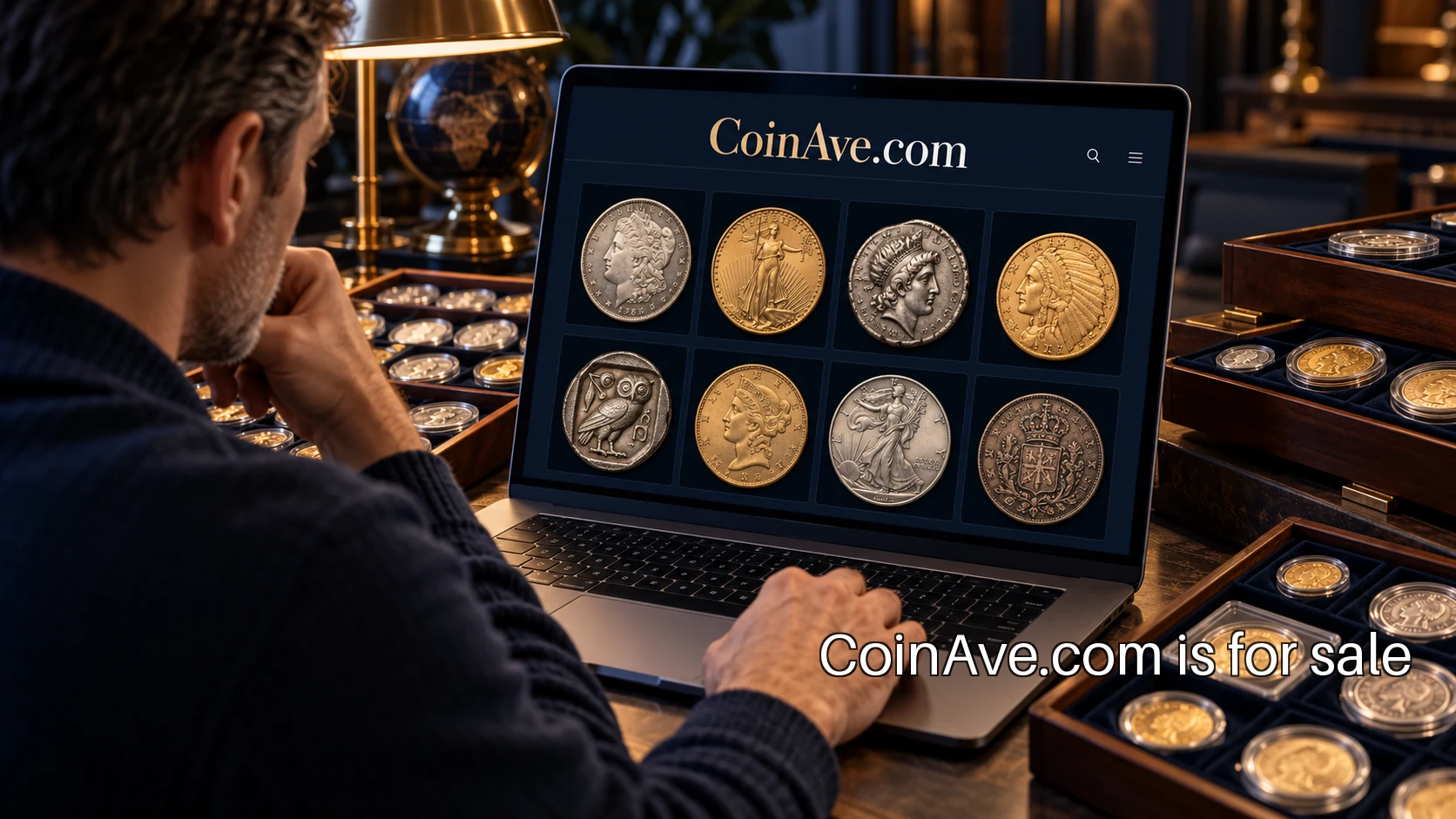
As a secondary use for CoinAve.com, a physical rare-coin catalog could serve a different audience from the crypto concepts. A growing collection can become difficult to understand long before it becomes large. Photographs live on one device, purchase details in an email folder and identifying notes in a spreadsheet. A useful collection workspace would connect those pieces around the individual object. Help an owner find the right record and understand how its information was established.
CoinAve.com could support that focused software product. This concept is illustrative, and it begins with private organization rather than a public showcase. A collector should be able to record an object without deciding to share it. Public pages can come later, with explicit choices about the details and images that other people may see.
A catalog software founder could begin with collectors who already keep a spreadsheet and want a clearer connection to their images. A sample collection and an import demonstration would make the value easy to inspect. A small collecting club could help recruit a voluntary pilot through its usual channels. Keep this numismatic audience separate from the crypto concepts so visitors understand which product the invitation concerns.
Give the physical coin a stable identity
Assign an internal record number when an object is added. Keep that number unchanged when its title, attribution or storage location changes. A human-readable code can help the owner connect a holder to the digital record, but avoid encoding uncertain facts into the permanent identifier. A number that includes a guessed date becomes awkward when research corrects the date.
The minimum record could include a short description, a photograph of each side and a note about where the identification came from. Let the owner save an incomplete draft. A family collection may arrive with little context, and a form full of required specialist fields can stop the work before it begins. The interface should distinguish information that is absent from information that has been checked and remains unknown.
Model the evidence carefully
Separate the object from the owner's claims about it. A date written on a holder, an attribution in an auction catalog and a later research note may disagree. Store those observations with their sources rather than silently replacing the earlier one. A current preferred description can still appear at the top, with the supporting record available below it.
The Smithsonian's National Numismatic Collection offers a useful reminder that numismatic collections include varied objects and research contexts. A software builder should leave room for tokens, medals and related items if those belong to the chosen audience. Do not stretch a rigid coin-only field into a misleading description of something else.
Keep ownership details private by default
Purchase costs, storage locations and personal correspondence need separate visibility controls from a descriptive image. Avoid one public-private switch for the whole collection if users need finer choices. A collector might want to share a study group with friends while keeping seller details and acquisition documents private. Explain those settings in the language of the action: who can open this link, and what will they see?
Test a shared view while signed out. Review downloads as well as the page itself. A private note can leak through an export or an image filename even when it is hidden on screen. Build a small set of sample records that includes sensitive fields, then use it whenever sharing behavior changes. Privacy is easier to reason about when the team can inspect a concrete example.
Make import forgiving and export ordinary
Start with the spreadsheets collectors already have. Show a preview that maps columns to fields and makes skipped data visible. Preserve the original import file so the owner can compare it with the result. A dry run should reveal duplicate identifiers, missing image paths and dates that cannot be interpreted. Never discard a column simply because the first version of the application has no matching field.
Exports should be readable outside the product. A table of records and a folder of images with stable filenames are useful foundations. Include a small explanation of how the files connect. If references point to external pages, preserve the URL and the date it was recorded. An export test is successful when another person can reconstruct the relationship between an object and its supporting material.
Include the next practical task
A collection record becomes more useful when it helps someone act. Add a short follow-up list: photograph the reverse, check the reference, attach a receipt or confirm a storage location. Avoid treating every incomplete field as a warning. Some research questions may remain open for years, while a missing photograph can be resolved during the next session.
Care instructions can be linked without turning the application into a conservation authority. The U.S. Mint discusses storage materials and documentation. A workspace could help an owner retain that documentation and note the holder used, while directing specific care questions to qualified specialists.
Pilot the whole record journey
Invite a few collectors to import ten varied objects, correct one attribution, attach new images and export the result. Ask them to find an item a week later. Watch the language they use when something is missing. Those sessions can reveal whether the product needs clearer labels, a better search view or simpler image handling. Only then decide which additional features deserve development. CoinAve.com could give the workspace a consistent identity while the product earns its place in an owner's routine.