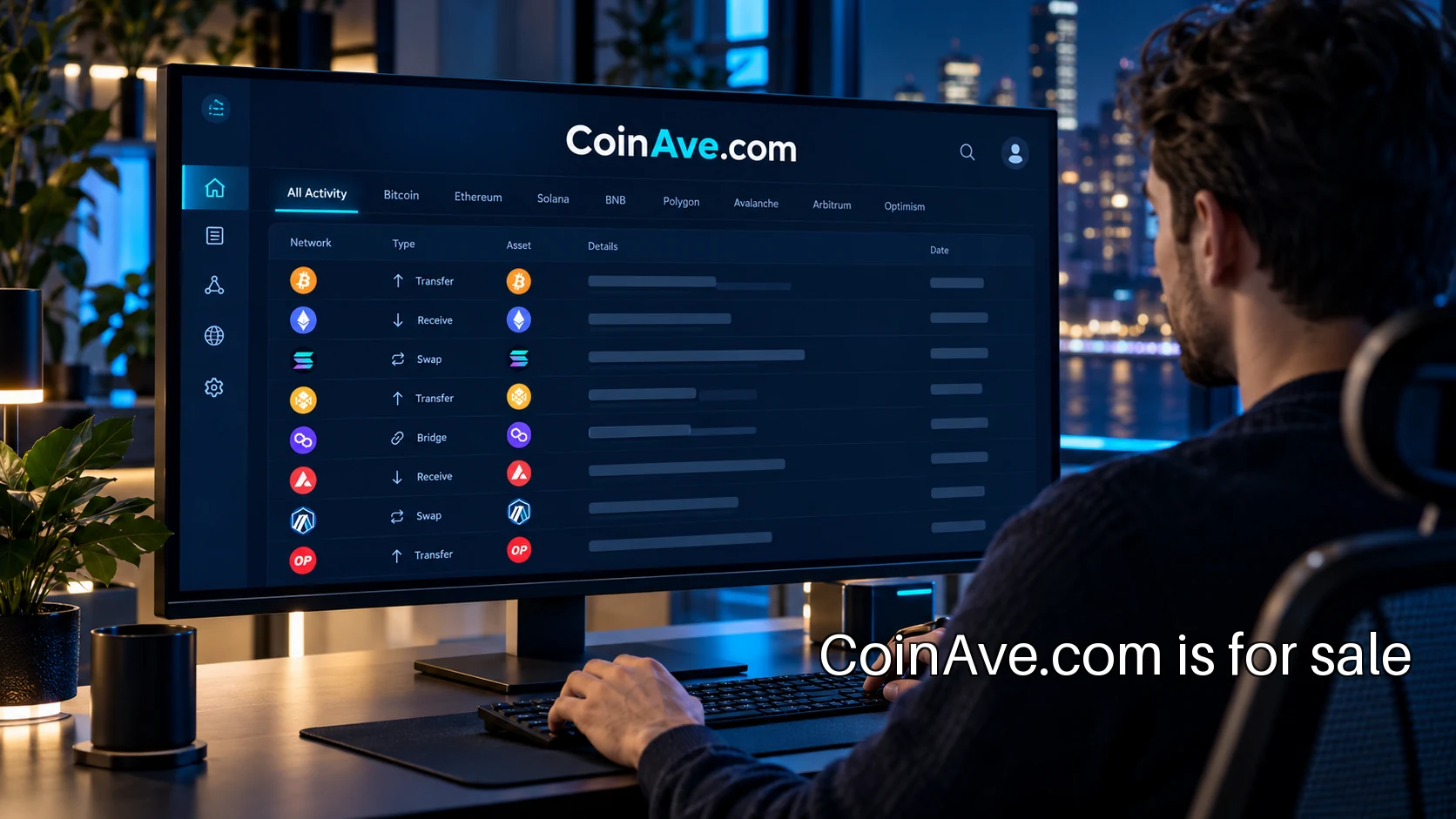
A crypto activity workspace could begin with a modest promise: help someone find and understand a record they have already created. A transaction reference can become difficult to interpret when it is separated from its network, the application involved and the person's own notes. A focused workspace would connect those pieces and explain where the information came from. Keep the first version focused on reading and organization.
CoinAve.com could provide the public identity for that product. This is an illustrative concept for a future owner, not a functioning service. Start the pilot on one supported network and a small set of activity records. That makes it possible to test the most important question: can a person find the right event and understand what the screen actually knows about it?
The first audience could be people who already use one supported network and keep their own activity notes. A software founder serving that group could demonstrate the workflow with sample records, invite a few testers through a relevant developer or user community with the moderators’ agreement, and learn which records they struggle to retrieve. A public example export would make the proposed benefit easy to inspect before anyone shares an address.
Begin with an address and a network
Treat the network as part of the record's identity. A familiar-looking address or transaction reference is not enough context for every interface. Store the supported network explicitly and use a consistent name in the import screen, activity view and export. The Ethereum network documentation describes different network environments. A workspace should state which environment its data comes from instead of leaving someone to infer it from an icon.
For the pilot, allow a public address to be entered without requiring a wallet connection. Explain which provider will receive that query and whether the address is stored. Reading public information does not make the association between an address and a user harmless to disclose. Keep personal labels separate from retrieved data, and choose private visibility as the starting point.
Preserve the source before adding a label
Retain the transaction reference, observed block information, retrieval time and provider response needed to understand a displayed event. Then add a readable interpretation. Those layers should remain distinct. A label such as received or interacted with an application can help navigation, but it should not erase the underlying reference or imply more certainty than the parser supports.
Design an unknown state before testing real examples. A record may not fit the first parser, a provider may be unavailable or a query may cover only part of the requested history. Show those conditions directly. An empty result should not automatically become no activity. A user trying to organize records needs to know whether the search completed and which period or data types it included.
Keep the product genuinely read-only
A records workspace does not need to request a recovery phrase, private key, transfer or spending approval. Put that boundary into the actual implementation as well as the introductory copy. Review every integration for unexpected signing prompts. The Ethereum security guidance explains the importance of protecting recovery material and examining requests before signing. A tool whose job is observation should not teach people to approve a prompt simply to see a list.
Personal notes can still be edited within the workspace. Make the difference clear: changing a note changes the local record, not the blockchain. A user should be able to distinguish retrieved facts from private annotations in both the page and a download. That distinction helps the product remain understandable as more organization features are added.
Make freshness part of every answer
Show when information was retrieved and which network state it reflects. An activity view that refreshed yesterday should not look identical to one that refreshed moments ago. If a refresh fails, retain the previous result with a visible age rather than replacing it with a confident empty page. Let the user request another attempt without losing personal notes.
Build a small set of examples that exercises partial history, pending activity, failed requests and an unsupported event. These are ordinary states a team can inspect during a pilot. A source comparison view can help a user understand a parser label and report a mistake. Give the support team a way to reproduce a problem using only the minimum information required.
Give records a useful way out
An export could include the network identifier, transaction reference, observed status, retrieval time, source and user note. Explain the columns in a short field guide. Avoid turning that export into a tax determination or an assertion about the purpose of a transaction. A record can preserve evidence while leaving accounting and other specialist conclusions to appropriate processes.
Test the file outside the application. Can someone identify the network, follow the reference and tell which wording came from the user? Can they distinguish an unavailable field from a zero or an empty note? These small choices matter more to a records product than a decorative summary panel. Keep the export stable as the interface changes.
Pilot one complete workflow
Invite a small group to add a public address, locate a known event, attach a note and export it. Use records they are comfortable disclosing, with a clear explanation of provider queries. Ask them to return later and find the same event. Record where the network context or source wording becomes confusing. That is the material for the next release.
A useful first version could remain narrow for quite some time. Clear records, honest data limits and predictable exports already solve a concrete problem. CoinAve.com could give the project a consistent brand as the team learns which additional tasks deserve attention. Any broader financial functionality would need a separate product decision and the expertise appropriate to that scope.